Everyday Puzzles: Mini Games
- 4.6
- Rating
- 10.00M
- Installs
- Free
- Price
 Analysis by App-foxy
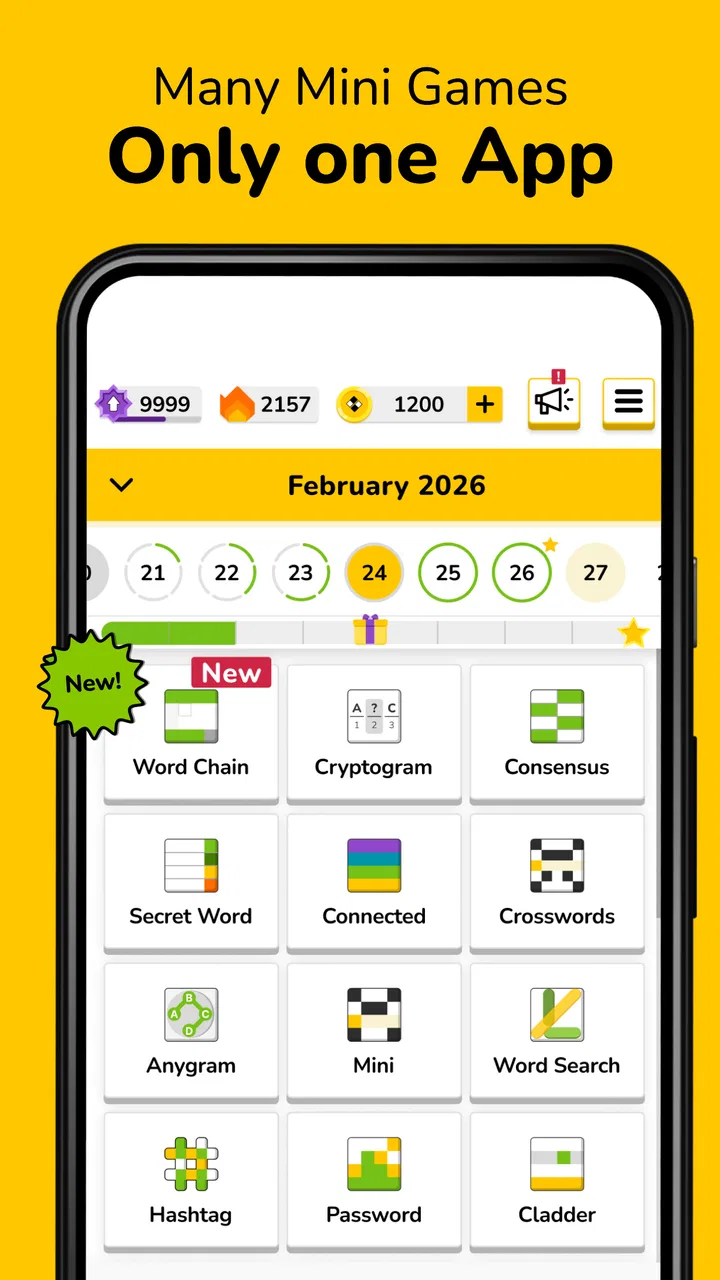
I came away from Everyday Puzzles: Mini Games with the feeling that it understands a very specific kind of mobile player: someone who wants a quick mental break without committing to a long campaign, complicated rules, or a large download routine. It is a free trivia game from Fanatee, Inc. that brings several word-based activities into one place, including hashtag-style prompts, crosswords, and word searches. That mix gives it a broader appeal than a single-format puzzle app, although it also means the experience depends on which type of challenge you enjoy most.
My first impression was less about spectacle and more about convenience. I could move between different puzzle moods instead of opening separate apps for a short word search, a clue-based crossword, or a prompt that asks me to think in associations. That makes the game particularly easy to use in small gaps during the day. I would not choose it when I want a deep narrative adventure or a highly competitive trivia ladder, but I would recommend it to anyone who likes bite-sized wordplay and wants variety without learning a new interface for every puzzle.
The game is available to an Everyone audience, runs on Android versions starting with 7.0, and its current version is 12.0.1. It has reached over five million installs, with a 4.3 average from around sixty-six thousand ratings. Those figures suggest that its simple format has found a substantial audience, but the numbers do not replace the more important question: whether its particular blend of puzzles suits the way you like to play.
You May Also Like

 AccuWeather: Weather Radar
AccuWeather Review: A Quick, Clear Forecast for Everyday Decisions
For everyday plans, the best forecast is the one you can understand quickly. AccuWeather makes rain timing, radar, and local conditions easy to act on, with a few trade-offs.

 Hill Climb Racing
Why Hill Climb Racing Still Turns Crashes Into One More Run
A tiny car, a bumpy hill and one more upgrade: Hill Climb Racing keeps resurfacing because its simple chaos makes every near-miss feel personal.

 AliExpress - Shopping App
AliExpress Makes Global Shopping Feel Personal, but Shoppers Bear the Risk
AliExpress turns a global marketplace into a pocket-sized discovery engine. Its reach is useful, its shopping loop compelling, and its trade-offs easy to miss.

 Lords Mobile: Kingdom Wars
Lords Mobile Is a Kingdom-Building Routine, Not a Quick Match
A case-by-case verdict on the building, battles, device demands, and social commitments that make Lords Mobile rewarding for some players and exhausting for others.

 PDF Scanner app - TapScanner
TapScanner Makes Paperwork Easier to Capture, Check, and Share
TapScanner makes scanning with a phone feel less like a rescue operation and more like a dependable step in getting work done. Its capture tools are useful, though not flawless.

 Block Blast!
 Shows How Much a Puzzle Game Can Leave Out
A quiet grid game shows why puzzle players increasingly value instant clarity, repeatable skill and low-pressure play—and where the genre still needs to catch up.
More From Our News Desk
View All News


A small puzzle world built from familiar word language
The strongest part of the presentation is the way it treats everyday language as the setting. Instead of placing the player in a fantasy map or wrapping each challenge in a dramatic story, it builds its identity around words, clues, categories, and recognizable associations. The hashtag mode feels especially connected to modern conversation because it asks you to think about terms that belong together, while crosswords and word searches draw on older, more familiar puzzle traditions.
That combination creates a coherent mood even though the activities are different. The game does not need a fictional world to give its sessions a sense of place. Its world is the language itself: the pleasure of spotting a word, connecting an idea, or noticing a hidden answer that was visible all along. I found that approach refreshing because it keeps the focus on the player’s thought process rather than on decorative storytelling.
The visual direction works best when it stays out of the way. A word puzzle needs a readable playing surface, clear separation between clues and answers, and controls that do not compete with the letters. In a game built around short sessions, visual clutter would be especially damaging because the player is usually trying to enter a quick mental rhythm. Here, the overall concept feels designed around picking up the phone, understanding the task quickly, and getting started.
There is also a useful change of texture between formats. A crossword encourages a slower search through clues and possible answers. A word search is more visual and often gives the eyes a concrete pattern to scan. Hashtag-style play is more associative, asking you to consider how words relate rather than simply locating letters. Switching between these modes helps prevent the whole app from feeling like one repeated exercise.
Why the art direction matters more than it first appears
In a word game, art direction can seem secondary, but it affects how long I am willing to stay with a puzzle. If the screen feels calm and legible, I can concentrate on solving. If the presentation makes every action feel crowded or overly urgent, even an easy challenge becomes tiring. The restrained identity of this game supports its everyday purpose: it feels closer to a pocket puzzle book than to a loud arcade title.
That is also where the game’s limits become visible. Players who want expressive characters, an evolving setting, or a strong visual reward loop may find the presentation too modest. The appeal is in the act of solving, not in collecting a dramatic world around the puzzles. I see that as a deliberate trade-off rather than a flaw, but it is an important one before downloading.
One practical tip is to choose the mode according to your mental energy instead of treating every session the same way. When I want something visually active, a word search is a natural choice. When I have more patience for interpretation, a crossword is better. When I want to play with associations and cultural language, the hashtag format offers a different kind of concentration. This simple rotation makes the package feel more substantial than repeatedly forcing myself through one favorite mode.
Sound, pacing, and the shape of a short session
The game’s mood depends heavily on restraint. A puzzle app like this does not need a cinematic soundtrack to work, and its best rhythm comes from the repeated cycle of reading, considering, entering, and confirming. That cycle gives the player a quiet sense of progress. The atmosphere is less about a grand emotional arc and more about creating a small pocket of attention in an otherwise busy day.
I think that pacing is one of the main reasons the format works for commuting, waiting rooms, or a short break between tasks. I can begin with a crossword, lose momentum on a clue, and move to a word search without abandoning the entire session. In a single-mode app, that pause might mean closing the game. Here, changing activity can preserve the habit while still giving my brain a different task.
The trade-off is that the flexible pacing can also make the experience feel less focused. If I am looking for a tightly structured daily challenge with a clear beginning and end, moving among several formats may feel a little loose. This is not a game I would pick when I want a carefully staged campaign. It is better understood as a shelf of compact activities that share a word-centered identity.
Another realistic use case is a shared family moment. Because the content rating is Everyone and the basic ideas are easy to explain, one person can work on a clue while another suggests possibilities. That does not turn the app into a formal multiplayer game, but the different puzzle types create natural opportunities for casual discussion. A word search can be solved visually by one person, while a crossword clue may invite another player’s vocabulary or general knowledge.
I would still keep expectations sensible about sound and presentation. The central reward is the answer itself, not a rich audio-visual performance. If you usually play mobile games with headphones because music and effects are a major part of the attraction, this title may feel comparatively quiet in spirit. Its rhythm comes from solving rather than from dramatic audio cues.
How to make the pacing work for you
I found it useful to set a small personal boundary before starting. For example, I might decide to complete one activity during a coffee break rather than opening the app with the vague intention of playing indefinitely. That approach fits the design better than expecting a long uninterrupted session. The variety makes short visits satisfying, while the lack of a story campaign means there is little reason to rush through the content.
It is also worth changing modes when frustration starts to build. A difficult crossword clue can make the whole session feel blocked, but a word search may restore momentum without requiring the same kind of recall. Conversely, if a word search feels repetitive, moving to a clue-based activity can make the next few minutes feel more mentally engaging. This is one of the package’s less obvious strengths: the modes can act as pacing tools for one another.
Where the mechanics fit together, and where they do not
The mechanics share a clear foundation: reading language, recognizing patterns, and making connections. That common ground is what prevents the collection from feeling random. I do not have to learn an unrelated control scheme each time I switch activities. The challenge changes, but the mental vocabulary remains close enough that the transition feels natural.
Crossword play is the most clue-driven option. It rewards patience and the willingness to leave an answer unfinished while solving another part of the grid. That makes it a good fit for players who enjoy gradual deduction. It can be less satisfying if you dislike ambiguous clues or prefer puzzles with one immediately visible route to the answer.
Word search play offers a more direct contrast. The task is concrete: scan the grid, identify the target, and trace it. I like using this mode when I want a puzzle that feels active without requiring a long chain of reasoning. It is also a good entry point for a younger or less experienced player because the objective is easy to understand. The downside is that players who want constant novelty may find the basic search pattern familiar after repeated sessions.
The hashtag-style mode is the most distinctive part of the package because it leans on association and contemporary language rather than only on traditional puzzle structure. It can feel more conversational than a standard crossword, but that also means the answer space may depend more on how you interpret a prompt. I would choose it when I want something flexible and idea-based, not when I am looking for strict, formal deduction.
The key mechanical trade-off is variety versus depth. Having several formats in one app reduces boredom and makes the game easy to recommend to mixed groups of players. At the same time, someone who is devoted to crosswords may prefer a dedicated crossword app with a deeper focus, while a serious word-search fan may want a product built entirely around grids. This game’s value comes from the combination, not from being the most specialized tool for any single format.
There is a practical reason to keep all three styles available: they exercise different kinds of attention. A crossword asks me to hold clues and partial answers in mind. A word search asks me to inspect visual information efficiently. Hashtag puzzles ask me to connect concepts and vocabulary. Rotating them can make a short session feel more balanced than spending the same amount of time on one repetitive mechanic.
Who should download it, and who should pass?
I would recommend it to casual puzzle players, families looking for approachable word activities, and anyone who enjoys having several small games in one app. It is especially suitable if you often play in short bursts and want to decide your level of concentration after opening the game. The free entry point makes trying that combination straightforward, although in-app purchases range from $0.99 to $49.99 per item, so I would pay attention to any purchase prompts and keep spending limits in mind.
I would be more cautious about recommending it to players who want a completely ad-free-feeling premium experience, a story with a definite ending, or a single highly specialized puzzle system. It is also not the best match for someone who expects competitive trivia in the sense of live opponents, rankings, or rapid-fire general-knowledge rounds. Although it belongs to the trivia category, its identity is much more about word puzzles and everyday mental play than about a traditional quiz show.
Compared with using separate crossword, word-search, and word-association apps, the main advantage is convenience. I can stay within one familiar environment and choose a mode based on my mood. The disadvantage is specialization: a dedicated alternative may offer a more focused experience for one particular puzzle type. My advice is simple. If you regularly switch between these formats, the all-in-one structure is useful. If you only care about one, compare the depth of that single mode with what a specialist app provides.
The developer, Fanatee, Inc., has positioned the game around accessibility rather than a narrow expert audience. The Everyone rating supports that broad approach, but accessibility should not be confused with a lack of challenge. Familiar rules can still produce tricky moments, especially when a clue or association does not match your first interpretation. I would treat it as welcoming rather than automatically easy.
The atmosphere verdict after living with the format
What stays with me is the consistency between the game’s presentation and its purpose. The art direction keeps attention on language, the sound and interaction rhythm support short visits, and the three puzzle families give the player different ways to concentrate. Nothing needs to be inflated into a dramatic adventure. The mood is quiet, practical, and lightly playful, which is exactly why it fits ordinary moments better than many more ambitious mobile games.
There are real compromises. The visual world is not likely to satisfy players who need character-driven presentation. The collection format may feel less deep than a specialist crossword or word-search app. The game’s free structure includes optional purchases, and anyone sensitive to spending prompts should approach those choices deliberately. Its trivia label may also create the wrong expectation if you are looking for a competitive knowledge quiz rather than word-centered activities.
For me, the strongest workflow is to use it as a flexible mental break: start with the puzzle type that matches my energy, switch when a format becomes tiring, and stop after a manageable session instead of expecting a campaign. That approach makes the variety meaningful rather than merely decorative. It also reveals the game’s most useful quality: it gives different kinds of wordplay a shared home without demanding that every visit feel the same.
My final recommendation is positive, with the right expectations. I would install Everyday Puzzles: Mini Games if I wanted approachable crosswords, word searches, and hashtag-style challenges gathered into one free app. I would skip it only if I wanted a rich fictional setting, a dedicated expert-level puzzle environment, or live trivia competition. For everyday play, its calm presentation and adaptable pacing create a coherent mood, while the mechanics remain clear enough to make a five-minute break feel worthwhile.
FAQs for Everyday Puzzles: Mini Games
01What kind of games can I expect in Everyday Puzzles: Mini Games?
Everyday Puzzles: Mini Games offers a diverse collection of puzzle games designed to challenge and entertain. You can expect classic jigsaw puzzles, brain teasers, logic puzzles, and pattern recognition games. The app regularly updates its library to include new and engaging puzzles to keep users entertained.
02Is Everyday Puzzles: Mini Games suitable for all age groups?
Yes, Everyday Puzzles: Mini Games is designed to cater to a wide audience, from children to adults. The app features a variety of difficulty levels, ensuring that everyone from beginners to advanced puzzle enthusiasts can find something enjoyable. Parental controls are also available for younger users.
03Does the app require an internet connection to play?
Everyday Puzzles: Mini Games can be enjoyed both online and offline. While an internet connection is needed to download new puzzles and updates, you can play your downloaded puzzles without an internet connection. This makes it ideal for on-the-go gaming when Wi-Fi or mobile data is unavailable.
04Are there any in-app purchases in Everyday Puzzles: Mini Games?
Yes, the app offers in-app purchases. While many puzzles and features are free, some premium content and advanced features may require a purchase. Users can buy additional puzzle packs, hints, or remove ads for a more seamless experience. The app ensures transparent pricing and purchasing options.
05How can I track my progress in the game?
Everyday Puzzles: Mini Games includes a user-friendly progress tracking system. Players can view their completed puzzles, check their best times, and see how they rank against other players globally. The app provides achievements and rewards to keep users motivated and engaged with their puzzle-solving journey.
Pros
- Engaging variety of mini-games.
- Intuitive and user-friendly interface.
- Regular updates with new puzzles.
- Offline play available for convenience.
- Minimal ads ensure smooth gameplay.
Cons
- Limited hints can frustrate beginners.
- Occasional lag on older devices.
- In-app purchases for premium puzzles.
- No multiplayer or social features.
- Sound effects can't be customized.

Everyday Puzzles: Mini Games
Gallery